Pope Leo XIV and King Charles III of the United Kingdom have bestowed honorary religious titles upon each other, the first time this has happened in 500 years, according to the official website of the British Royal Family.
“With the gracious approval of His Majesty the King, the Dean and Canons of Windsor are delighted to announce that His Holiness Pope Leo XIV has become Papal Confrater of the College of St. George at St. George’s Chapel, Windsor,” states the text published on Oct. 23.
The announcement highlights that both leaders sought to underscore the ties between Christian traditions, within a global context marked by polarization and conflict. “Mindful of the value of Christian unity, in an increasingly polarised and turbulent world, The King and The Pope have joined together in Christian brotherhood and, for the first time in half a millennium, are receiving religious titles which underscore what unites rather than what separates the Roman Catholic Church and the Church of England,” the text notes.
The statement adds that this gesture represents “a visible sign of spiritual fellowship, ecumenical friendship and Christian fraternity.”
It also acknowledges the historical ties between the college and St. George’s Chapel, Windsor, and the Holy See, as well as the progress made in relations between the Catholic Church, the Church of England, and the Anglican Communion.
The text notes that October marks one year since the “historic state visit to the Holy See” made by King Charles III and his wife, Queen Camilla. On that occasion, the British monarch was received as a “royal confrater” of the papal basilica and abbey of St. Paul Outside the Walls in Rome. At that time, the Holy Father had already been invited to become a “papal confrater” of St. George’s at Windsor.
Just as there is already a chair for the British king at the basilica of St. Paul Outside the Walls, a similar chair for the pope will soon be unveiled in St. George’s Chapel at Windsor. It will be consecrated in the European autumn, alongside a “mosaic icon of Christ of Cefalù, gifted to His Majesty by His Holiness during the State Visit,” the statement concluded.
The historic 2025 meeting
On Oct. 23, 2025, Pope Leo XIV and King Charles III prayed together in the Sistine Chapel, marking the first time a pope and a British monarch have prayed together during a state visit to the Vatican.
During the visit, King Charles conferred upon the pope the title of Knight Grand Cross of the Order of the Bath, while the pontiff bestowed upon the monarch the honor of Knight Grand Cross with Collar of the Vatican’s Order of Pius IX, and upon Queen Camilla the distinction of Dame Grand Cross of the same order.
The connection of the British king to the papal basilica of St. Paul Outside the Walls
Following the arrival in England of Roman missionary monks such as St. Augustine of Canterbury and St. Paulinus of York during the sixth and seventh centuries, Saxon kings including Offa and Æthelwulf contributed to the upkeep of the apostles’ tombs in Rome.
Toward the end of the Middle Ages, the British kings were recognized as “protectors” of the basilica and abbey of St. Paul Outside the Walls; its coat of arms came to include the insignia of the Order of the Garter, the oldest and most prestigious order in the United Kingdom. This tradition was interrupted by the Reformation and the centuries of estrangement that followed.
A new chair, bearing the royal coat of arms and the Latin inscription “Ut unum sint” (“That they may be one”), has been placed in the basilica of St. Paul Outside the Walls for King Charles and his successors to use during future visits.
Antonio García Condado, 78, the town pharmacist, was one of the first people to see dozens of bodies beneath the twisted wreckage of metal following a deadly train collision in Spain. The sight of two high-speed trains destroyed in a brutal head-on collision, their steel carriages mangled and twisted, forever shattered the quiet routine of Urda, a town of barely 2,500 inhabitants in the province of Toledo, Spain, on Oct. 28.
Antonio García Condado, 78, the town pharmacist, was one of the first to see dozens of bodies trapped beneath the wreckage and to assist injured passengers who did not even have the strength to cry out for help. He was finishing breakfast when his daughter alerted him that a train accident had occurred. Without a second thought, he got into his car and drove toward the area. At first, he believed it was only a minor incident.
“When I got there, it all seemed very minor. There was no traffic, hardly any cars. I said to myself, ‘Well, this can’t be very serious.’ But as I got closer to the AVE train’s cab, there was no cab. It was a mass of twisted metal, bodies, and dying people,” he recalled a day after the tragedy, still visibly shaken, in an interview with EWTN News Español, the Spanish-language sister service of EWTN News.
‘Some were moving their hands among the bodies’
What struck him most was the deathly silence that hung over the scene. “There were no screams. Perhaps they didn’t even have the strength to speak. Some were moving their hands among the bodies,” he explained.
Journalists from various news outlets repeatedly asked García what he had witnessed. But repeating the story did nothing to lessen the impact of the scenes he had seen. Every time he told it, García became emotional once again.
“I was deeply affected by the farewell of a dying man to his wife: ‘Maite, I love you very much. Take care of the children.’ The last words he said moved me greatly: ‘God is good,’” he recalled. Shortly afterward, he noticed another survivor who was calmly asking for help despite the severity of his injuries. García described a young man standing behind him, remarkably composed, asking for an ambulance.
“Then I noticed that his arm had been severed. He had lost his arm. I broke down. I think I even cried,” he said. After that initial shock, he realized just how serious the situation was and immediately returned to his pharmacy. He gathered all the medical supplies he could and mobilized his entire family.
“I came back here empty-handed to get supplies, especially painkillers. My son came with me, my daughter too, my wife, and my assistant. We practically emptied out the pharmacy and all went back, trying to solve whatever problems we could,” he explained.
When he returned to the accident site, security forces directed him to enter from another access point. There he encountered an even more devastating scene on the other side of the train. “One carriage had been crushed into another. Just imagine the bodies that were in there. It was horrifying,” he said.
Within minutes, the disaster area involving the two crashed trains, a Renfe AVE carrying 397 people and an Iryo train carrying 147 passengers, filled with the activity that accompanies major catastrophes: dozens of ambulances crossing paths with funeral-home vehicles, fire trucks, Civil Protection units, and officers of the civil guard.
Faith, the only comfort in the midst of tragedy
Throughout the morning, García assisted emergency teams however he could, supplying medicines and medical materials when stocks began to run low.
“What affected me most was that first moment, when I saw people asking for help and I couldn’t do anything, because I was practically alone. It was a tremendous feeling of helplessness,” explained the man of deep religious conviction.
For him, faith in Christ has been and remains his greatest source of support. “When believers experience traumas this great, we always turn to the same thing. I think it brings tremendous comfort. It’s the only way to keep going forward.”
Catholic leaders in Africa have described the Church’s growth there as an opportunity to share its faith, vocations, and missionary experience with the universal Church while continuing to receive gifts from other local Churches. According to the latest statistics published by Agenzia Fides, Africa’s Catholic population has now surpassed Europe’s, rising to 288.3 million compared with Europe’s 287.2 million. Africa now has the second-largest Catholic population, after the Americas, which the organization counts as one region.
The data Fides used comes from the Church’s Book of Statistics, which is updated yearly. The latest edition includes data through Dec. 31, 2024. In responses shared with ACI Africa, the sister service of EWTN News in Africa, Catholic leaders in Africa pointed to families, catechists, pastoral presence, and the witness of missionaries among factors they believe have contributed to the growth.
Catholics in the world numbered 1.4 billion, with an overall increase of 15.8 million Catholics compared with the previous year. As in previous years, increases were registered above all in Africa and in the Americas, followed by Asia, Europe, and Oceania.
The African continent recorded the largest increase in Catholics, adding 7.58 million compared with an increase of 6.99 million in the Americas. Africa gained 1,676 priests, the largest continental increase, compared with a worldwide net increase of 425 priests.
According to the Fides report, Africa was the only continent to register growth in seminarians, adding 786, while the global total declined by 2,891.
Sharing the gift of faith
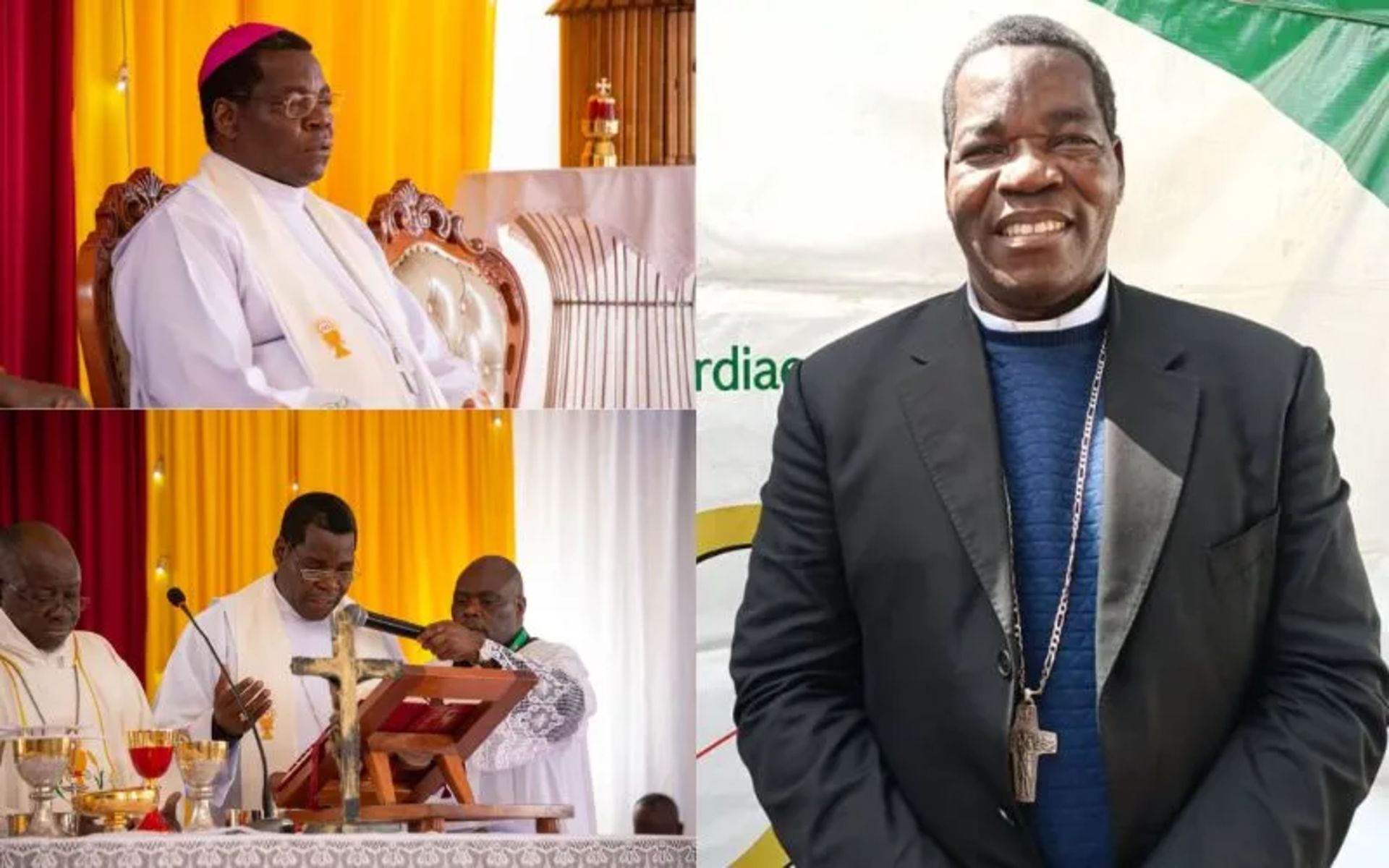
For Bishop Edward Hiiboro Kussala of South Sudan’s Diocese of Tombura-Yambio, the findings are a reason for gratitude and renewed missionary responsibility.
“Having received the gift of faith through the missionary witness of others, we are now blessed to share that gift with the universal Church,” Hiiboro said.
Bishop Edward Hiiboro Kussala of the Diocese of Tombura-Yambio in South Sudan. | Credit: ACI Africa
As bishop of Tombura-Yambio since 2008, Hiiboro also serves as president of the Integral Human Development Commission of the Sudan and South Sudan Catholic Bishops’ Conference. He said that growth of faith is not a competition.
“Africa is not competing with any continent in the growth of faith. We are part of one universal Church, united in Christ and enriched by the gifts of different peoples and cultures,” he said.
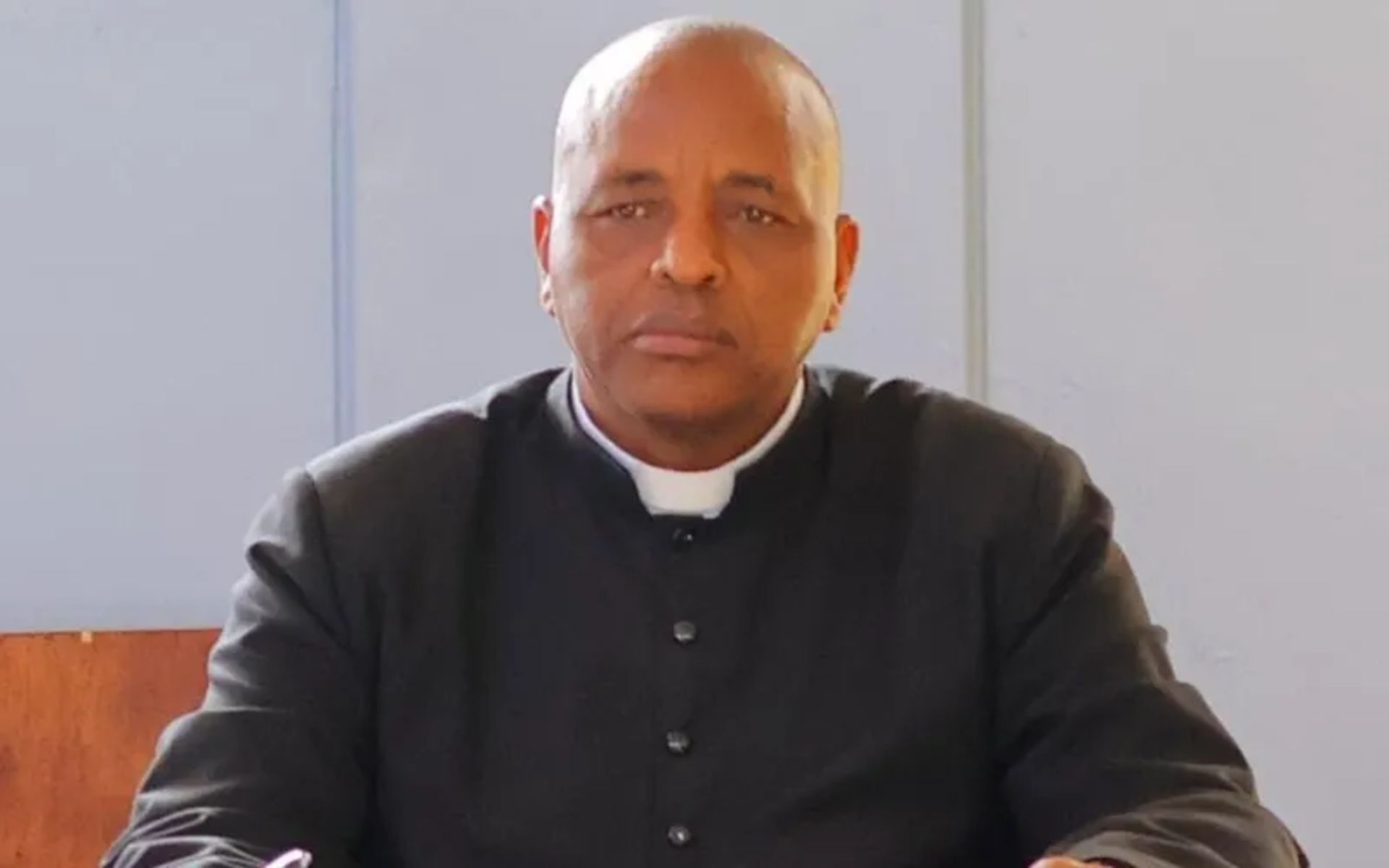
Father Vincent Simba, rector of Nairobi-based St. Thomas Aquinas Senior Seminary, said the increase in Catholics and priests offers hope for Africa and the universal Church.
Father Vincent Simba, rector of Nairobi-based St. Thomas Aquinas Senior Seminary. | Credit: St. Thomas Aquinas Senior Seminary-Theologicum, Nairobi
Simba expressed hope that Africa would have opportunities to send missionaries to places from which the continent received the Christian faith.
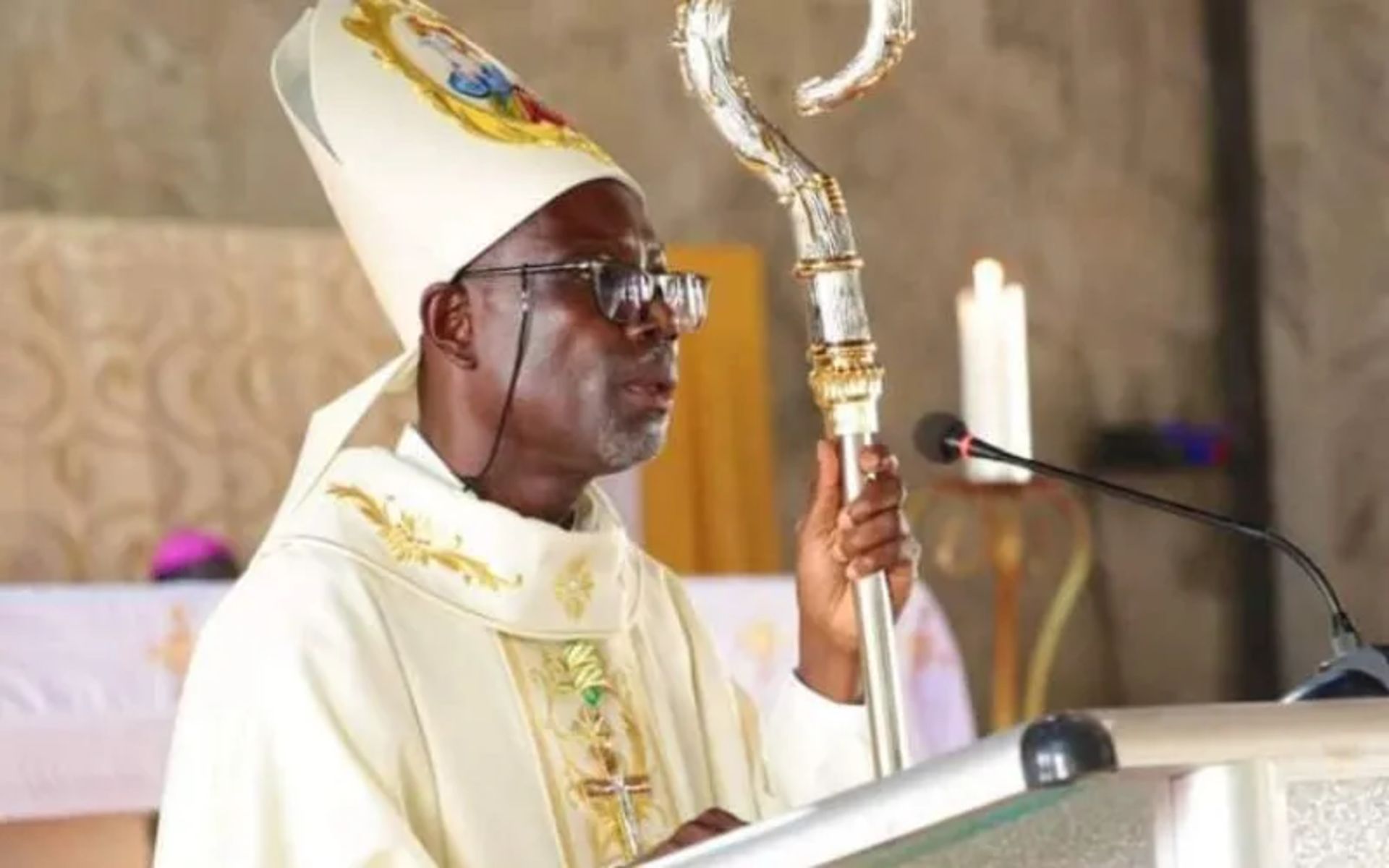
Bishop Joseph Kacou Aka of Ivory Coast’s Diocese of Yamoussoukro said the figures are an invitation to deepen communion among local Churches. “Africa is called to share its gifts: its vocations, its community experience, its theological reflection, and its witness of faith,” he said. “But mission remains a fraternal exchange in which each Church both gives and receives.”
Aka, who was consecrated bishop in 2023, said pastoral action in his diocese is guided by the theme “Autonomous and Missionary Church, Communion of Communities.”
Bishop Joseph Kacou Aka of Ivory Coast’s Diocese of Yamoussoukro. | Credit: Catholic Diocese of Yamoussoukro
Families, communities, and pastoral presence
In his response to ACI Africa, Hiiboro pointed to family bonds, community life, and openness to God as among the conditions he believes have helped the growth of Christian faith in Africa, alongside the work of missionaries, catechists, priests, women and men religious, and laypeople.
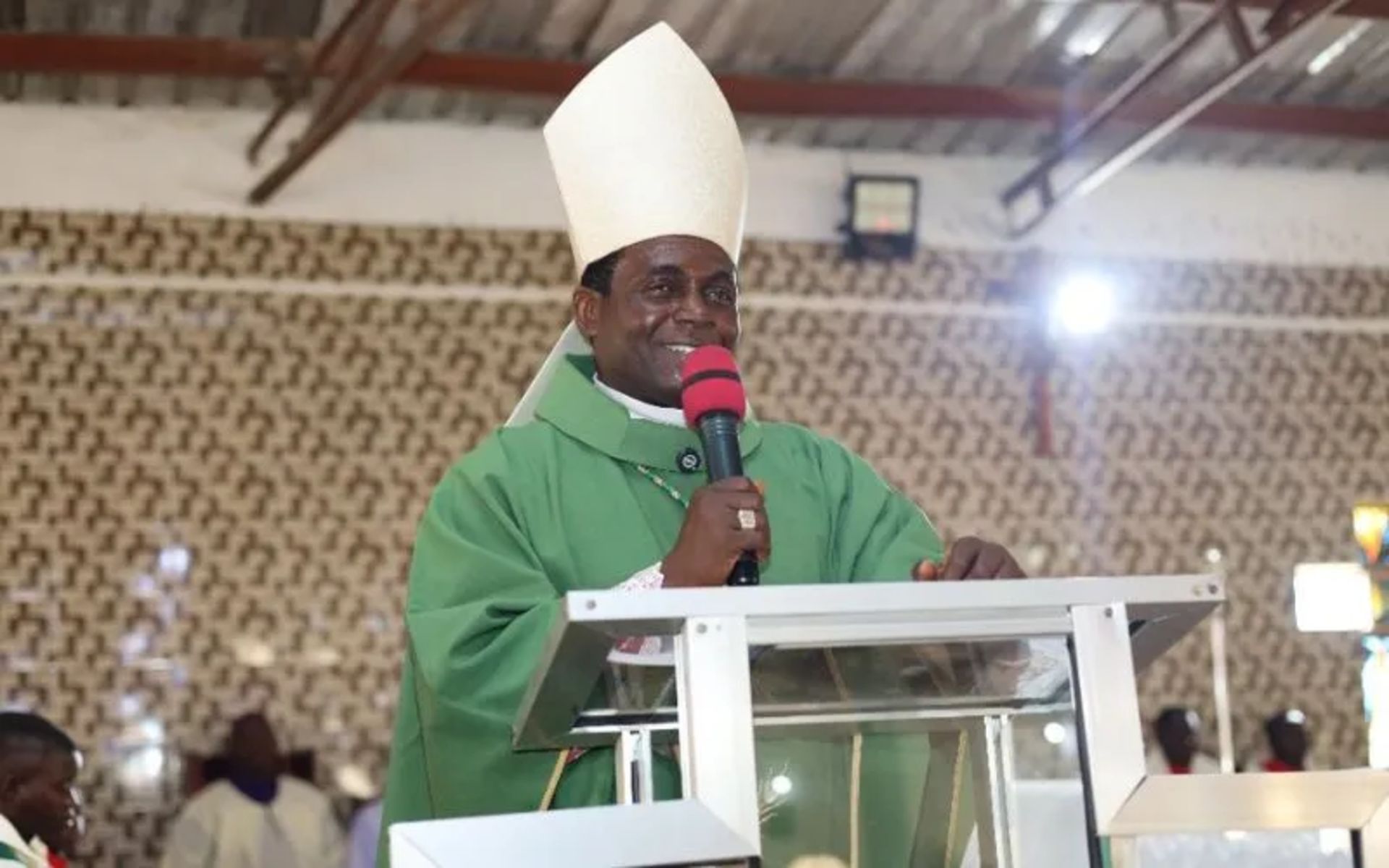
In Nigeria, Bishop Gerald Mamman Musa of the Diocese of Katsina identified the continent’s youthful population, family life, liturgies, and the work of Catholic institutions among factors contributing to growth.
“In Nigeria, parish communities, Catholic schools, hospitals, and lay movements help transmit the faith across generations,” Musa said.
Bishop Gerald Mamman Musa of Nigeria’s Diocese of Katsina. | Credit: ACI Africa
Musa, who also chairs the Communications Commission of the Catholic Bishops’ Conference of Nigeria (CBCN), said his diocese had seen its number of seminarians rise from about 21 in 2023 to more than 40 in 2026.
He cautioned that “demographic growth alone does not explain conversion.”
Father George Omondi, a Kenyan-born member of the Congregation of the Holy Spirit, commonly known as the Spiritans, pointed to the accessibility of pastoral services.
Omondi, who previously served as vice provincial superior and councilor for formation in the Spiritans’ Kenya and South Sudan Province, recalled seeing an increase in parishes in Kenyan Catholic dioceses, bringing services closer to the faithful.
Father George Omondi. | Credit: ACI Africa
Omondi said during his parish ministry he also observed adult baptisms and received converts from other churches into the Catholic Church.
In his own response, Aka cautioned against assigning a single cause to the growth. The statistics, he said, “describe a development without, by themselves, establishing its causes,” and do not determine the respective contributions of family transmission, adult baptisms, and demographic factors.
The Catechism of the Catholic Church defines the paschal mystery as “Christ’s work of redemption accomplished principally by his passion, death, resurrection and glorious ascension, whereby dying he destroyed our death, rising he restored our life”. It is on this mystery that the core of the Catholic doctrine is based. The entire liturgy is a celebration of this mystery of Christ passion and death and resurrection. Still in liturgical celebrations it is proclaimed as the mystery of faith with the words that “we proclaim your death O lord and profess your resurrection until you come again”.
The origins of the paschal mystery the word paschal is derived from the Greek word pascha which means Passover. It is a remembrance of the deliverance of the Israelites from slavery in Egypt, (cf. Exodus 12) which lead them into freedom, into new life. The Passover was a recognition of the hand of God that saved his people and led them out of slavery to the promised land. There is a vivid connection between the old feast of the Passover for the Israelites and the redemptive work of Christ though his passion and death that earned us freedom from slavery to sin. Christ, through the paschal mystery pays the price for our redemption. He is the new Passover.
The entire life of Christ is centered on the redemptive mission. From his proclamation in the synagogue that “the spirit of the Lord is upon me, for he has anointed me to proclaim good news to the poor, he has sent me to proclaim freedom for prisoners and recovery of sight for the blind and to set the oppressed free” (cf. Luke 4:18).
The redemption brough about by Christ is not only spiritual but also physical in the sense that his mission concerns the human person in an integral way, that is body and soul. He accomplishes this by his concern for the hungry, the sick, the lame, the blind to whom he offers healing and restoration of life.
The apex of his accomplishment comes about by him offering himself at the last supper, his body and blood as the paschal lamb. The blood that marked the door steps of the houses of the Israelites has been replaced by the blood of Jesus Christ, the lamb of God, the paschal lamb. By dying, Christ restores our life. Although the celebration of the pascal mystery is done in each eucharistic celebration, the easter triduum puts more emphasis on it through the entire liturgy of Holy Thursday, Good Friday Holy Saturday and the easter vigil celebration.
The prior Lenten observances prepare the faithful to embrace newness of life by dying to themselves and rising with Christ. No wonder the joy of the Easter candle and the singing of the Exultet all make reference to movement from darkness to light. The resurrection of Christ is a sign of victory of life over death, of good over evil. Thus, as the faithful celebrate the triumph of Christ, there should also be personal triumph over evil that leads to newness of life resulting from the effect of the paschal sacrifice of Christ.
On the 11th of February 1858, our lady appeared to a little 14-year-old girl Bernadette Soubirous in the cave of Massabielle, France while she was gathering firewood. She appeared to her 18 times that year and her figure remained mysterious to the little Soubirous and many other people who learnt of her apparitions.
Having been asked by the local bishop what the name of the lady was, Bernadette was lured to ask her who she was, a question to which our lady replied that “I am the immaculate conception”. This answer came as a confirmation of the dogma of the immaculate conception that had earlier on been proclaimed by pope Pious IX on the 8th of December 1854.
What is the Immaculate conception and why is this taken as one of the dogmas of the church? First and foremost, from its etymological meaning, the word ‘immaculate’ is derived from Latin ‘im-maculatus’ which literally means a stainless spot. The same word immaculate in English is used to describe a state of purity, of faultlessness or of impeccability. That is what the virgin Mary is.
The dogma asserts that “The most blessed virgin Mary, was from the moment of her conception, by a singular grace and by the virtue of the merits of Jesus Christ, savior of the human race, preserved immune from the stain of original sin”. She was conceived without the stain of the original sin and was not corrupted by any sin. By the grace of the Holy Spirit, Mary remained free of every personal sin her whole life long. The fathers of the eastern Church refer to Mary as “All-holy” because of the absence of corruption of sin in her entire life. Mary also proclaimed by the Church as the Mother of God in the counsel of Ephesus in the year 431 must certainly have received an immense grace from God. God could not let the womb that would bear his son incarnate to be corrupted by the state of sin. The catechism of the catholic church No. 490 clearly states that to become the Mother of the savior, Mary was enriched by God with gifts appropriate to such a role.
At the annunciation, (Luke 1:28) when the angel Gabriel greets Mary, she proclaims her as one “full of grace” and in verse 30, the angel says, “do not be afraid Mary, you have won God’s favor”. Mary filled with the grace of God indeed is not accorded such a status by human merit but by the power of her own creator who immerses her in the story of salvation of mankind, granting her an extraordinary favor to be the mother of the savior of the human race.
The doctrine of the immaculate conception thus, alludes to holiness, freedom from sin. To the present-day believers and all thorough the church, Mary is a model of holiness and invites us to seek the grace of God to attain holiness.
Lent means “forty” and symbolizes the 40 days of intense preparation for the EASTER festival. Why is 40 a significant number? Relatedly, Jesus withdrew for 40 days. Moses waited 40 days before going up to Sinai. Elijah walked for 40 days towards Horeb and the Jews’ march through the desert lasted 40 years.”40” is therefore a symbolic number that expresses the eve, intense “preparation” of something very important which, for us, is EASTER. Lent is thus not understood if it is not in terms of EASTER.
CHANGE TIME
On Ash Wednesday, we are told: “Repent and believe the Gospel.” Lent is therefore a time of conversion. Convert means “return”, “change”, “correct the path” and “Renew”. The change we want is to go from the “old man” to the “new man”. The “Old man” is one who leaves behind Christ and the Gospel. The “New man” is the one who follows Jesus and lives according to the Gospel.
CHANGE THE HEART
Ash Wednesday is a day of fasting and abstinence. Ash is a penitential sign; it expresses the believer’s availability to direct life according to God, the decision to undertake the path of conversion that passes through the sacrament of reconciliation, and the active and conscious participation of the Eucharist.
LENT, THE ROAD TO EASTER
Faced with a world that divides and confronts men, a world that is becoming dehumanized and creating loneliness, we urgently need to open ourselves and convert more to God. Lent is a privileged time to listen to the Word of God, not with deaf ears but with the openness of heart that leads us to convert through the sacrament of reconciliation, sacramental life, and solidarity with those around us.
Lent has a goal, a point of arrival, which is Easter. There is no authentic Lent without Easter. Lent thence invites us to focus our eyes on Jesus Christ and follow him until Easter, that is, until the giving of our own life. This is why for Catholics, Lent is a strong time of Prayer, Fasting, and Almsgiving. These three signs; Prayer, Fasting, and Almsgiving show our conversion and faithful following of Jesus Christ.
What do Prayer, Fasting, and Almsgiving entail for the Catholic? What does the Church understand, teach, and live since its origins?
1. Christian prayer
Praying is talking, relating, and dealing with God in the style of Christ; hence, the name Christian prayer. Today, it is palpable, in quite a few, not only the lack of relationship and relationship with God but even the forgetfulness of God. Seeking and doing the will of God constitutes the heart of Christian prayer; hence the teaching of Christ, “thy will be done.” In prayer, we turn to God because we need him to fulfill our lives and we are reminded that we can never achieve this or overcome evil alone. The selfish and proud person is never happy, he never achieves fulfillment, he never projects love. Christian prayer therefore sustains and fertilizes activities and human life itself.
It is necessary to exercise ourselves in personal, family, and community prayer. Let us not forget that authentic Christian prayer always culminates in liturgical prayer and sacramental life.
2. Fasting
Christian fasting is far more removed from masochism and protest. It is not difficult today to verify “fasting” as a means of social protest; hunger strikes. Fasting is also used to improve health or stay in shape: medical diets, physical exercises, etc.
Christian fasting is much more than all this and its difference is clear. To fast Christianly is to abstain from food, sacrifice, and exercise the body to always be available to the love of God, to be more sensitive to the life of love and charity, and to open oneself more to God and others.
Christian fasting is always a function of charity; if it is authentic, it is always projected in sharing and solidarity. Christian fasting is always linked to prayer; strengthens prayer, and disposes the body to the will of God.
For this reason, in difficult times and pressing situations, the Church asks to unite fasting with prayer, for example, on Ash Wednesday and Good Friday; hence the words of Jesus Christ: “This kind of demons cannot be removed by anything, but by prayer and fasting” (Mk 9, 29). Fasting for the sake of fasting makes no sense and does not make people better… Especially in a world where many fast not because it is Lent, but because they have nothing to eat.
Like the athlete who does not stop exercising and training until he overcomes obstacles to achieve the proposed goals, the believer does not stop doing penance until he remains united with God and is able to overcome evil. Fasting strengthens the spirit, elevates God, opens up to God and others, and weakens the forces of evil: selfishness, sensuality, evil inclinations, and passions.
3. Alms
Almsgiving in the Christian tradition is an expression of charity, solidarity, and fraternity. It is a means that shows taking seriously the commandment of the Lord: “You shall love your neighbour as yourself.” (Mk 12, 31). We must not reduce Almsgiving to giving what is left over but rather, sharing what we need, giving-sharing “as far as it hurts us.” Here, the Christian spirit of Fasting is inserted: giving to the needy what we do not eat or save; as Saint Augustine said: “may our fasts feed those who do not have to eat.”
Almsgiving is not limited to sharing material things. It is necessary to give alms also by sharing our time, qualities, abilities, and influence for the good of those most in need. In this sense, Almsgiving is urgently needed from parents, teachers, public servants, priests, and young people, in the field of health and justice. If this comes to light, out Fast would have yielded fruits!
Around 1,000 members of the Legion of Mary from 21 Curiae in the Diocese of Larantuka made a pilgrimage to Lewouran, East Flores, Indonesia, on 23 October, to pray before the relics of St. Peter the Apostle. The gathering offered a moment of spiritual renewal and reminded the faithful that authentic devotion must bear fruit in concrete acts of charity, solidarity and service to those most in need.
Around 1,000 members of the Legion of Mary from 21 Curiae in the Larantuka Deanery, Diocese of Larantuka, made a pilgrimage to St. Peter the Apostle Station Church in Lewouran, East Flores, East Nusa Tenggara, Indonesia, on Friday, 23 October 2026. The pilgrimage offered an opportunity to deepen their faith while reflecting on their call to make God’s love present through service to others.
The pilgrims first gathered at the Rosa Mistika Marian Grotto in Riangbunga Station. After praying the Tessera, the Legion of Mary’s characteristic prayer, and celebrating the Eucharist, they continued their journey to Lewouran to pray before relics of St. Peter the Apostle and a fragment of stone from the Holy Door of St. Peter’s Basilica in the Vatican.
For the faithful of Lewouran, the visit was a significant event in their community’s spiritual life. The small village in East Flores welcomed hundreds of pilgrims who came to pray and draw closer to God through devotion to St. Peter, the apostle of Jesus and patron of the local church.
Father Moses Atasoge, parish priest of St. Joseph Lewotobi Parish, said the pilgrims’ presence offered the faithful an opportunity to strengthen their bonds of fellowship and grow in their understanding of St. Peter’s spirituality.
“For the faithful of Lewotobi Parish, the presence of these pilgrims is a historic moment. They regard this day as one filled with meaning,” he said.
According to Father Moses, the event was made possible through the collaboration of Legion of Mary members and the Parish Pastoral Council. Local faithful helped prepare the venue, coordinate activities and organize the liturgical celebrations.
He stressed that the experience reminded the faithful of the importance of fraternity, cooperation and surrender to God.
“We learn to build strong bonds of fraternity, work together well, and cultivate a spirit of surrender under God’s protection and power. We believe that without God’s intervention, none of this could have been accomplished properly,” he said.
Father Marco Solo Kewuta
From the Marian Grotto to St. Peter the Apostle
Sisi Leba, chair of the pilgrimage organizing committee, explained that the event was the annual pilgrimage of the Renha Rosari Larantuka Comitium, held every October.
This year, members from 21 Curiae took part. Sisi said the original plan focused on the Rosa Mistika Marian Grotto in Riangbunga Station. However, she proposed that the pilgrims also visit St. Peter the Apostle Station Church in Lewouran, where the relics of St. Peter and the fragment of stone from the Holy Door of St. Peter’s Basilica are kept.
The proposal was approved by the Comitium. After completing their prayers at the Marian grotto, the pilgrims proceeded in procession to Lewouran.
For Sisi, the journey carried spiritual significance because it brought together two devotions deeply rooted in the life of the Church.
“In the Gospel, the Blessed Virgin Mary and St. Peter are always close to Jesus and, in many ways, work together. Therefore, we journey from the Blessed Virgin Mary to St. Peter,” she said.
She added that the pilgrims were deeply moved, touched and strengthened in their faith by the experience.
Sisi described Lewouran as a spiritual oasis, a place where people can seek inner peace and encounter God.
She likened the village to a little Nazareth: a simple place that may not be widely known but can offer a profound experience of faith. She recalled Nathanael’s question in the Gospel of John 1:46: “Can anything good come from Nazareth?”
For Sisi, the question invites reflection on how spiritual encounters are not always found in large or well-known places. God can also reach people through small and humble communities.
Relics as a bridge to the universal Church
The relics of St. Peter the Apostle and the fragment of stone from the Holy Door of St. Peter’s Basilica were brought to Lewouran by Father Marco Solo Kewuta, SVD, a priest from the village who serves in the Vatican in Rome.
According to Father Marco, the journey covered more than 15,000 kilometres and passed through six checkpoints: Rome, Dubai, Jakarta, Yogyakarta, Denpasar and Kupang.
The presence of the relics has special significance for the Lewouran community. Father Marco recalled that when Mount Lewotobi Laki-Laki erupted and affected surrounding areas, his village was relatively spared, and its residents did not have to evacuate.
He also remembered 2001, when he blessed a church painstakingly built by the local faithful and spontaneously chose St. Peter the Apostle as its patron. Six years later, in 2007, he was called to serve in the Vatican, in the setting centred on the tomb of St. Peter.
Father Marco said he did not intend to present Lewouran as a sacred place in itself. Rather, he sees these experiences as part of God’s providence, whose mysteries are not always fully understood by human beings.
“I do not want to make Lewouran or our church sacred in itself, but these experiences hold a mystery of God’s power that perhaps many people do not yet know,” he said.
He hopes that pilgrims who arrive carrying personal struggles will find peace, hope and renewed strength in their faith.
Father Marco said he had heard accounts of some pilgrims shedding tears while reading the prayers he had prepared and the guidebook he had written. For him, such experiences show how pilgrimage can become a space where people bring their inner struggles before God.
He also sees the presence of the relics as a spiritual bridge between the universal Church in the Vatican and the faithful living on its peripheries.
In his book, Relics of St. Peter and the Holy Stone from the Holy See of the Vatican in Lewouran, he explores the spirit of synodality promoted by Pope Francis: the call to walk together, foster unity and involve all the faithful in the life of the Church.
However, he cautioned that pilgrimage must not end with admiration for relics or emotional experiences alone.
Quoting a prayer inscribed at the Porta della Preghiera, or Door of Prayer, in St. Peter’s Basilica in the Vatican, he emphasized the importance of faith that produces good works: “O Lord, make my faith bear fruit in good works.”
“Faith must not remain merely at the level of the heart and mind, words or inner feelings. It must be translated concretely into acts of charity, compassion and service to others,” he said.
Prayer that becomes service
Father Marco encouraged Legion of Mary members to translate their pilgrimage experience into concrete concern for those in need. He cited several social challenges facing local communities, including crop failures, the plight of orphans, families living in poverty, the sick, the elderly and victims of human trafficking.
He said the Legion of Mary’s apostolic mission could be expressed through a tangible presence among these vulnerable groups.
Sisi Leba said Legion of Mary members seek to fulfil this calling according to their respective abilities. Many are elderly people, retirees, farmers and homemakers living on modest incomes.
These limitations, however, do not prevent them from serving others. Their social outreach includes visiting the sick, persons with disabilities and the elderly, as well as accompanying people affected by disasters and family difficulties.
“We will continue to preserve, live out and develop the spirituality of Mary. We will carry out our apostolate through prayer and simple works, depending on what we are able to do,” Sisi said.
She explained that service does not always mean providing material assistance. Being present, showing concern, praying and being willing to listen can also be meaningful gifts to others.
The pilgrimage to Lewouran is therefore expected not only to deepen devotion to the Blessed Virgin Mary and St. Peter, but also to strengthen the spirit of service in everyday life.
Joy amid limited resources
Kalis Muda, chair of the local church council at St. Peter the Apostle Station Church in Lewouran, described the arrival of the pilgrims as a historic experience for the community.
“The presence of the pilgrims is not merely an ordinary visit, but an event of faith that brings joy and a particular sense of pride to the entire community,” he said.
Welcoming around 1,000 people, however, was no easy task. The church building could not accommodate all the participants, requiring the local faithful to organize space and services with limited facilities.
The challenge was particularly significant because the people of Lewouran also live in an area affected by the eruption of Mount Lewotobi Laki-Laki. Nevertheless, through mutual cooperation and solidarity, they did their best to welcome the pilgrims.
Kalis hopes the visit will draw greater attention to the needs of the local faithful, particularly the development of church facilities and infrastructure to better accommodate pilgrims in the future.
More importantly, he hopes the shared experience will nurture a stronger spirit of prayer, fraternity and social concern within the community.
For the faithful of Lewouran, the relics of St. Peter are more than objects that attract visitors. Their presence serves as a reminder that even a small community far from the centre of the Catholic Church remains part of the universal Church.
For the Legion of Mary members, meanwhile, the journey from the Rosa Mistika Marian Grotto to St. Peter the Apostle Station Church offered an opportunity to deepen their faith and renew their commitment to the apostolate.
Ultimately, the pilgrimage invites participants to return to their daily lives with a fundamental question: How can prayer give rise to concern for others, faith strengthen fraternity, and an encounter with God inspire people to stand alongside those in need?
In Lewouran, East Flores, the witness of faith is seen not only in prayer before the relics, but also in the willingness of the local faithful to welcome others despite their limited resources. There, the pilgrimage finds its continuation: in a faith lived out through service, solidarity and love.
Marking 75 years since its establishment, the International Catholic Migration Commission schedules a meeting in Rome to elect a new President and approve a new organisational strategy for the coming years.
With approximately 304 million international migrants worldwide, according to data from the UN’s International Organisation for Migration, the need to accompany our brothers and sisters on the move, recognising and upholding their inalienable human dignity, is more urgent than ever.
That is the mission at the heart of the work of the International Catholic Migration Commission (ICMC) that has protected and served uprooted people – refugees, asylum seekers, internally displaced people, victims of human trafficking, and migrants – regardless of faith, race, ethnicity or nationality, since its inception.
Established in 1951 thanks to the vision and will of Pope Pius XII, Cardinal Montini (later Pope Paul VI) and American layman James Norris, the Commission’s Council, which represents national Episcopal Conferences and local Churches from across the world, will meet in Rome on 10-12 November.
The meeting will focus on the global situation related to human mobility and the specific challenges the Church is encountering across every continent. Members are set to elect a President and approve a new organisational strategy for the coming four years.
Among the speakers are Cardinal Fabio Baggio, Pro-Prefect of the Dicastery for Promoting Integral Human Development, members of that Dicastery, and Filippo Grandi, the former UN High Commissioner for Refugees.
Joining the meeting, the Catholic Church’s humanitarian organisation, Caritas Internationalis, Jesuit Refugee Service and the UN Refugee Agency (UNHCR).
In its statement announcing the meeting, the ICMC quotes Pope Leo XIV’s Apostolic Exhortation Dilexi te:
“The Church, like a mother, accompanies those who are walking. Where the world sees threats, she sees children; where walls are built, she builds bridges. She knows that her proclamation of the Gospel is credible only when it is translated into gestures of closeness and welcome. And she knows that in every rejected migrant, it is Christ himself who knocks at the door of the community.”
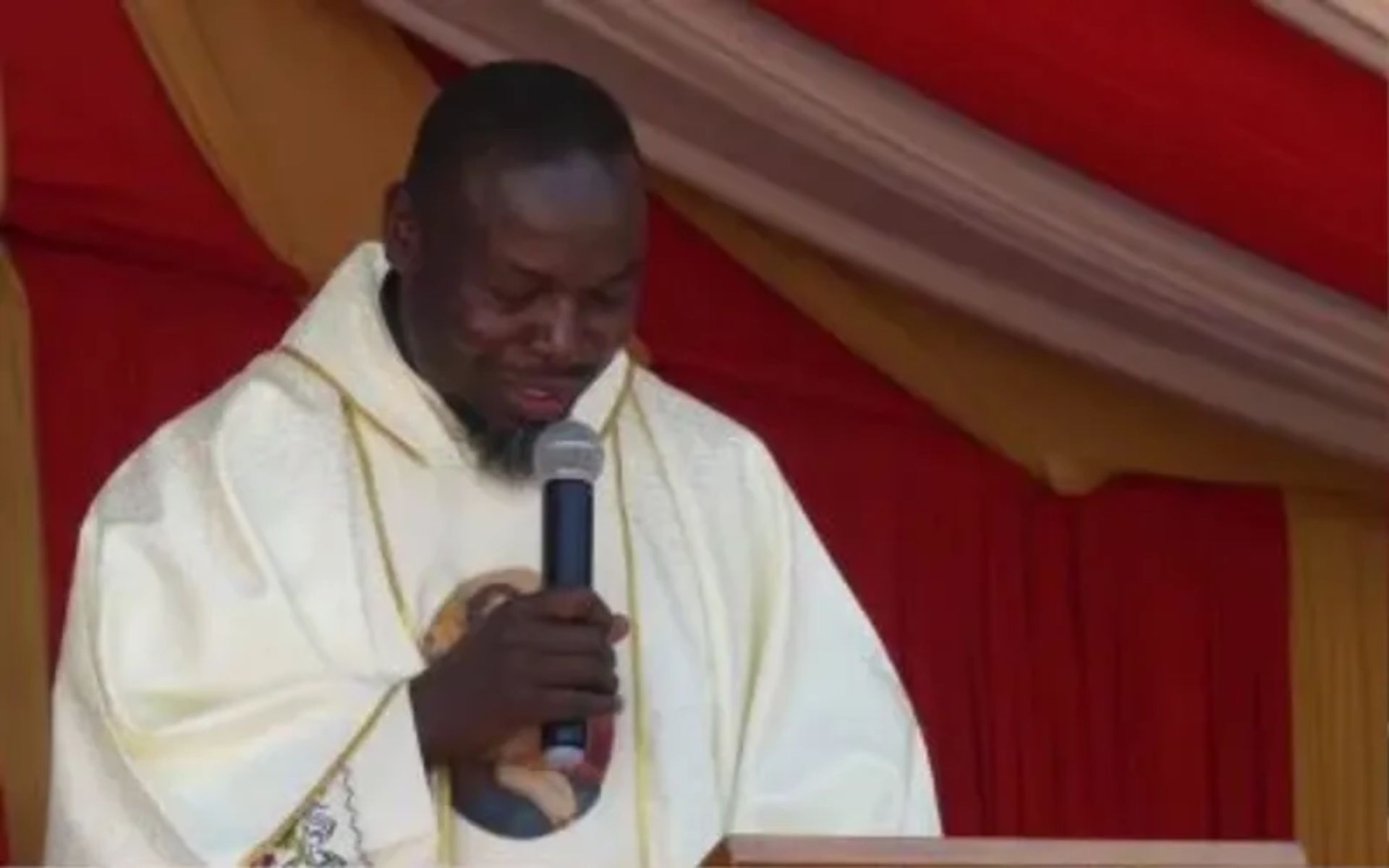
It is with profound sorrow, but also with deep gratitude to God, that we mourn the passing of our beloved priest, Rev. Fr. John Bosco Nambasi, MCCJ, who died following a tragic road accident in Mukono.
For more than ten years, Fr. John Bosco served among us, becoming much more than a priest in our community. He became part of our lives, our families and our parish family. Through his ministry, his teaching and his simple way of relating with people, he touched many hearts and left behind memories that will remain with us for years to come.
Fr. John Bosco was a simple, principled and dedicated priest. He loved God, loved the Church and genuinely loved the people entrusted to his pastoral care. He was always ready to serve. Whether he was called to celebrate Mass, administer the sacraments, visit a family, counsel someone in need or simply offer a listening ear, he made himself available.
He served faithfully in our parish and at Kyambogo Chaplaincy, giving himself generously to the spiritual and pastoral needs of the people.
One of the greatest legacies Fr. John Bosco leaves us is his deep love for the Word of God. Many of us will remember him for something that became almost a familiar feature after Mass. He would finish preaching, sometimes sit down, and then say those unforgettable words:
“Can you give me five minutes?”
Those five minutes, however, were rarely just five minutes! They would often become another lesson, another reflection, another journey into the Bible. With enthusiasm and patience, he opened the Scriptures for us and challenged us to discover the treasures contained in God’s Word.
He spent years encouraging families to own, read and understand the Bible. For some, his encouragement was the reason they bought their first Bible. For others, he rekindled a habit of reading Scripture that had been forgotten.
If Fr. John Bosco were speaking to us today, perhaps his message would be as simple and direct as ever:
“Please read the Word of God. Listen to what the Lord is telling you. Read the Bible before you come to church, and when you go home, read it again.”
He often reminded us of the words traditionally attributed to St. Jerome:
“Ignorance of Scripture is ignorance of Christ.”
But Fr. John Bosco did not teach us only to listen to God’s Word. He also reminded us that faith must be lived. He encouraged people to be productive, to work hard, to save, to invest, to manage their resources wisely and to prepare responsibly for the future. He reminded us that God has given each person talents and opportunities, and that we have a responsibility to use them well.
He was also a man who deeply loved and honoured his parents, and through his example he encouraged others to do the same. At this painful moment, our thoughts and prayers are especially with his family and, in a particular way, with his mother, now in her golden years. May the Blessed Virgin Mary, who knew the profound sorrow of losing her Son, hold her close and give her strength and consolation.
Father John Bosco, we thank God for the gift of your priesthood, for your years of service, for your teaching, for your love of Scripture and for your desire to help God’s people grow in faith and knowledge.
We will miss your smile.
We will miss your instructive voice.
We will miss your catechesis.
We will miss your passion for the Bible.
And we will certainly miss hearing you say:
“Can you give me five minutes?”
Those five minutes have now become part of our memories, but more importantly, they have left us with a message that will continue to speak to us:
Read the Bible. Read the Gospel. Listen to the Lord. And live His Word.
May the Lord whom you served faithfully welcome you into His eternal Kingdom. May the angels and saints receive you, and may the Blessed Virgin Mary accompany you into the presence of God.
As Scripture reminds us:
“Well done, good and faithful servant… come and share your master’s happiness.” — Matthew 25:21
Father John Bosco, your earthly ministry has come to an end, but the seeds you planted in the hearts of God’s people will continue to grow.
Rest now in the peace of Christ.
May your soul, and the souls of all the faithful departed, through the mercy of God, rest in peace.
Members of the Catholic Bishops’ Conference of Nigeria (CBCN) have designated Dec. 8 as a National Day of Prayer and fasting for the success of the country’s 2027 general elections, calling on Nigerians to prepare spiritually for the polls.
In a statement issued at the end of their 2026 second plenary assembly held at Our Lady and St. Kizito Pastoral Centre in the Diocese of Osogbo, the bishops urged stakeholders to work toward elections that are “free, fair and credible.”
“We announce that 8 December 2026 will be observed as a special national day for prayer and fasting for the success of the elections,” the bishops said in the statement following their Sept. 10–18 plenary assembly.
They encouraged eligible voters to participate in the elections and elect leaders who are qualified to serve while urging citizens to make their choices according to their consciences.
“We encourage eligible voters to come out en masse to vote qualified people into offices and in line with their good consciences,” the bishops said in the statement that their president, Archbishop Matthew Man-Oso Ndagoso, signed.
The CBCN also urged Nigerians to familiarize themselves with its pastoral letter on the forthcoming elections and follow the provisions and guidelines contained in the document.
As part of preparations for the polls, the bishops called on dioceses and parishes across the country to organize civic education and voter mobilization activities alongside end-of-month fasting and prayer.
They further encouraged the faithful to participate in rosary processions from October to December, linking the spiritual activities with preparations for the elections.
The bishops also addressed the role of technology and artificial intelligence (AI), urging politicians and other users to deploy emerging technologies responsibly and ethically, particularly in the context of the forthcoming elections.
“As a vehicle for evangelization, we enjoin all to use it to transform data into knowledge and insights for greater value,” they said while calling on political actors to exercise responsibility in their use of technology and AI.
The bishops said technology is closely linked to human freedom and autonomy but cautioned that its use must remain guided by ethical considerations.
“Technology is not inherently evil or antagonistic to humanity, but it is never neutral,” they said, referencing Pope Leo XIV’s encyclical Magnifica Humanitas.
They also raised concern over what they described as the growing challenge of neo-paganism in Nigeria, particularly among young people, which they attributed partly to economic hardship, cultural revival, and inadequate Christian formation.
The bishops observed that modern forms of neo-paganism spread rapidly through internet culture, media, and books, and called on pastoral agents to make greater use of digital platforms in evangelization and catechesis.
“We encourage pastoral agents to intentionally incorporate the use of digital spaces, social media, and online catechesis in teaching the truth of the Gospel,” they said.
They also called for what they described as healthy inculturation that respects positive elements of African cultural heritage while maintaining the foundational teachings of Christianity.
On education, the bishops described access to quality education as essential for human development and the peaceful integration of Nigeria’s diverse communities and cultures.
They said the Catholic Church remains committed to education and ready to collaborate with the government in providing quality learning opportunities while urging authorities to fulfill their constitutional responsibility to fund education.
“We, therefore, urge governments to embrace their constitutional responsibility of funding education,” they said, adding that children in public, private, and mission schools should have access to free education, particularly at primary and secondary levels.
They further called for policies that promote the development of the human person and contribute to the country’s overall development.
The bishops also expressed concern over a bill before the National Assembly that, according to them, could affect churches, mosques, schools, and humanitarian organizations involved in assisting vulnerable and conflict-affected communities.
They said provisions requiring the registration of foreign aid resources and giving authorities powers to supervise their use could create challenges for organizations providing critical assistance.
The bishops particularly raised concern about provisions that would allow authorities to deny or refuse renewal of an organization’s registration if its activities are considered not to be in the “national interest,” arguing that such provisions could give government officials broad discretionary powers.
They further said the proposed legislation could create additional bureaucracy, duplicate existing regulations, and increase government control over civic organizations.
“Non-profit organizations and Incorporated Trustees including churches, mosques, other religious bodies, and humanitarian groups are already strictly regulated by the Corporate Affairs Commission (CAC) under the Companies and Allied Matters Act (CAMA) and some other extant laws,” they said.
The bishops consequently called on the National Assembly and the federal government not to proceed with the bill, citing concerns over freedom of association, religion, thought, and conscience as well as its potential implications for the wider development of Nigerians.